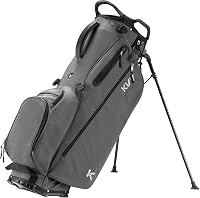
How to Choose a Golf Bag
To choose a golf bag, match it to how you move around the course: prioritize loaded comfort for carrying, secure fit for cart use, and club access for both.
On this page (11 sections)
- How to choose a golf bag for your usual round
- What is the difference between a stand bag and a cart bag?
- How much should a golf bag weigh?
- How many dividers should a golf bag have?
- Which pockets and weather features do you need?
- How do you check golf bag fit on a cart?
- Which golf bags suit different playing routines?
- How should you set up a new golf bag?
- Which mistakes should you avoid when choosing a golf bag?
- How do you care for a golf bag after a round?
- How do you make the final golf bag choice?
To learn how to choose a golf bag, start with how you move around the course: carry, push or ride. Choose the bag type first, then check loaded comfort, club organization, useful storage and fit with your cart and car.
A bag that makes sense for riding can become a burden when carried for a full round. Extra pockets also offer little value if a cart strap blocks them.
For a closer look at the main types, see our guide to stand bags and cart bags.
How to choose a golf bag for your usual round
Choose around the rounds you play most often, then account for occasional changes. Weight matters most when carrying, while mounting fit and pocket access lead the decision for cart use.
| Your routine | Start with | Main buying check |
|---|---|---|
| Carry most rounds | Carry-focused stand bag | Comfort with your normal load |
| Walk with a push cart | Cart bag or compatible stand bag | Secure base support and clear strap path |
| Ride most rounds | Cart bag | Pocket access while strapped in |
| Alternate carrying and cart use | Cart-compatible stand bag | Acceptable carrying load and cart fit |
| Mostly practice with a partial set | Compact stand bag | Enough room without unused bulk |
Think about the walk from your car, too. Steps, a distant parking area or a high trunk opening can make lifting comfort matter even when you ride every round.
If you alternate between walking and riding, decide which inconvenience you can accept. Read our stand bag vs cart bag comparison before choosing a heavier bag for occasional storage needs.
For help matching the bag to the rest of your walking setup, see our golf push carts and stand bags buying guide.
What is the difference between a stand bag and a cart bag?
A stand bag has support legs, while a cart bag is designed to spend the round mounted on a cart. The stand helps when setting clubs down between shots or beside a practice area.
Stand bags suit carrying, but the category includes heavier models intended for mixed use. Legs alone don't make a bag a good choice for walking a full course with it on your shoulders.
Cart bags favor storage and access while mounted. Their size and pocket arrangement can suit regular riders, but you still need to lift them into vehicles and onto carts.
If you plan to push a stand bag, our guide explains how to put a golf bag on a push cart.
How do you choose a golf bag for carrying?
Choose for balanced comfort with clubs and supplies inside. Empty weight helps narrow the field, but straps, bag length and load placement determine how the bag sits against your body.
Adjust both shoulder straps before judging the fit. The bag should stay controlled as you walk, without one shoulder taking most of the load or the lower end repeatedly knocking your legs.
Check access to the lifting handles as well. You'll use them when moving the bag out of the car, setting it down and putting the shoulder straps on.
If carrying is your priority, compare the best lightweight golf stand bags before accepting extra weight for storage.
When should you choose a cart bag?
Choose a cart bag when your clubs usually travel on wheels and carrying is limited to short transfers. Favor a secure mounting position and pockets you can open without loosening the cart strap.
A shoulder strap remains useful for loading, but it doesn't turn a large cart bag into a comfortable carrying bag. Consider the distance between your storage area, vehicle and clubhouse.
Our guide to what a golf cart bag is explains the layout and features to look for.
How much should a golf bag weigh?
Choose the lightest bag that meets your needs without sacrificing fit or usable storage. There is no single ideal weight because the load and the distance you carry it vary.
Compare bags using the same set of clubs and supplies. A bag that feels manageable when empty can feel very different after adding water, balls, an umbrella and a jacket.
Water and spare balls deserve particular attention because they can add substantial weight. Pack enough for the round, and remove accumulated supplies rather than treating every pocket as space to fill.
If you ride, check whether you can lift the packed bag over your trunk lip without twisting awkwardly. Grab handles and clearance around the opening matter alongside the weight number.
Avoid choosing a smaller bag that forces you to hang several items outside it. Loose gear can swing while carrying or catch on cart straps.
How many dividers should a golf bag have?
Choose separate slots for fixed organization or fewer sections for grouping clubs. Divider count should match how you arrange your set and how easily the grips move through the bag.
A 14-way top gives each club a home, making a missing club easier to spot. Fewer sections let you group woods, irons and wedges without following an individual slot pattern.
Check whether the dividers extend the length of the bag. A divided top can separate shafts at the opening while grips still share space farther down.
Large grips need enough clearance to enter and leave without forcing them. Check your putter separately, especially if its grip is wider than those on your irons.
If you want a slot for each club, read what a 14-way golf bag is. For a broader comparison, see how many dividers a golf bag should have.
Which pockets and weather features do you need?
Choose storage by what must fit and stay reachable, rather than total pocket count. A useful layout gives each regular item a place without requiring you to unpack other gear.
An apparel pocket should hold your usual rain layer or pullover. Think about the folded size of those items, since several small pockets won't replace one suitable clothing compartment.
Keep balls and tees in easy-access storage, and separate keys from items they could scratch. A magnetic pocket can offer quick access, but check that its closure suits what you intend to carry.
Cooler storage is useful only if it fits your drink containers. Keep wet containers away from dry clothing and electronics, even when they occupy separate compartments.
A rain hood covers the club opening; it doesn't make the entire bag waterproof. Water-resistant fabric and waterproof valuables pockets also serve different purposes, so choose protection around your usual weather.
How do you check golf bag fit on a cart?
Check base support, strap clearance and club access together. A bag that fits between the cart's supports can still rotate, block a pocket or press against its stand mechanism.
For a push cart, place the base fully on the lower support and align the upper section with the cradle. Secure the straps around the intended areas without trapping zippers or forcing the legs against the frame.
Check that the bag stays positioned during normal pushing and turning. Reposition a shifting bag rather than repeatedly tightening straps against an unsuitable contact point.
On a riding cart, secure the bag and open the pockets you expect to use. Confirm that you can remove the putter and longest club without snagging them against the cart roof or neighboring bag.
Our guides explain whether you can put a stand bag on a push cart and which accessories a golf push cart needs.
Which golf bags suit different playing routines?
Choose Findway for separate slots and occasional cart use, TaylorMade for grouped organization and apparel storage, ASK ECHO for cart-first storage, or Callaway for mixed use. Each solves a different problem, so start with your routine rather than brand preference.
Findway 14-Way Stand Bag for organized walking rounds
Choose the Findway if you want individual club spaces with adjustable dual straps and also use a cart sometimes. It has 8 pockets, including 2 cooler pockets, plus a towel loop and glove attachment area.
The cart attachment openings make this worth considering for mixed routines. Check their alignment with your cart's straps instead of assuming the bag will fit every support shape.
Its rain cover helps protect the club opening, while the leg restraint is useful when the stand isn't needed. Secure loose straps before mounting the bag so they don't hang near moving parts.
Skip it if minimizing carrying weight is your main goal. Also, don't assume separate compartments confirm full-length separation; choose a clearly specified full-length system if that's essential for your grips.
TaylorMade Classic Stand Bag for grouped clubs and clothing
Choose the TaylorMade if you prefer grouped club sections and separate apparel storage. Front-facing pockets, a magnetic stash pocket and a split-side apparel pocket give frequently used items distinct places.
TaylorMade describes 4 full-length club sections, but the supplied specifications also give a divider count of 15. Confirm the exact version and top layout before ordering if individual slots are a requirement.
The bag has 7 pockets, an oversized cooler pocket and a polymer putter-protection patch. TaylorMade says the UV-protected, yarn-dyed fabric helps resist fading.
Skip it if you need a confirmed slot for every club without further checks. Regular carriers should also establish its empty weight before choosing it over a bag with a known carrying load.
ASK ECHO T-Lock Cart Bag for storage-heavy cart rounds
Choose the ASK ECHO if you usually ride or push and want dedicated storage with a club-holding top. ASK ECHO says that top reduces rattling and contact between clubs.
Its storage includes 2 waterproof valuables pockets, 2 shoe pockets and a cooler compartment. A rain hood and several grab handles support weather preparation and loading.
The full-length organizer suits golfers who want a consistent place for each club. ASK ECHO specifies grip compatibility up to 1.2 inches, so compare your grips with that limit rather than assuming every oversized grip fits.
Skip it if you regularly carry between shots or struggle to lift a packed bag. Its storage capacity suits cart use, but filling every compartment increases the load you still have to move before and after play.
Callaway Fairway 14 Stand Bag for frequent changes of transport
Choose the Callaway if you switch between carrying and carts and want a stand bag designed around both roles. Callaway says its Lowrider 2.0 system works with riding, push and pull carts.
The Fairway 14 includes a Shaft Shield Top, Flex Pod Base and Anamatic double straps. A rain cover is included for covering the club opening.
This is a sensible direction when cart fit matters but you still want support legs at the range or beside a green. Check that its pocket arrangement holds your usual clothing and supplies before choosing it for mixed use.
Skip it if most rounds involve carrying and reducing shoulder load comes first. Double straps help distribute weight, but they don't remove the weight of the bag or its contents.
How should you set up a new golf bag?
Set up the bag with your normal round's equipment before playing. Club placement, pocket organization and strap adjustment should work together in the position you'll actually use.
- Arrange clubs for access. Keep shorter clubs from sitting beneath longer clubheads, then check the arrangement with the bag standing or mounted.
- Give regular items fixed pockets. Separate balls, clothing and personal items so you can find them without opening every zipper.
- Balance the load. Avoid putting all heavy supplies on one side, especially when carrying.
- Adjust straps while loaded. Make small changes until the bag sits steadily and both shoulders share the load.
- Check the stand or cart connection. Keep straps clear of moving parts and confirm that pockets still open.
Practice removing and returning your largest-grip club. If it catches, check for overcrowding or a poor slot choice rather than forcing it into place.
Leave enough room to put away a damp jacket during the round. Storage that works only when every item is folded perfectly will be awkward on the course.
Which mistakes should you avoid when choosing a golf bag?
Avoid buying for maximum capacity instead of your actual routine. Extra space, dividers and accessories help only when they solve a problem you have.
Choosing by divider count alone can leave you with cramped grip openings. Check the interior separation and putter clearance as well as the number across the top.
Assuming every stand bag suits carrying can lead to an unnecessarily heavy setup. Compare the loaded feel and strap adjustment before treating support legs as proof of walking comfort.
Ignoring storage at home can also create daily trouble. Check trunk access, shelf height and room for the bag's top rather than measuring only its base.
Finally, don't judge pockets while the bag is empty and standing freely. Cart straps, packed clothing and club placement can all change how easily you reach things.
How do you care for a golf bag after a round?
Keep the bag dry, clean and lightly packed between rounds. Routine care helps prevent trapped moisture, jammed zippers and debris around the stand mechanism.
Remove wet towels, gloves and clothing after play. Open damp compartments and let the bag air-dry before replacing the rain hood or putting it in enclosed storage.
Brush away dry dirt and wipe soiled areas with a damp cloth, following the bag's care instructions. Avoid soaking the bag or applying strong cleaners without checking that they're suitable for its materials.
Clear grit from zipper tracks and stand joints, and inspect strap attachments for wear. Stop relying on a damaged carrying attachment until it's repaired or replaced.
Empty cooler pockets and discard leftover food. A quick pocket check also keeps old scorecards and spare balls from gradually increasing your load.
How do you make the final golf bag choice?
The final step in how to choose a golf bag is to eliminate any option that fails your main routine. Carrying comfort, secure cart fit and easy club removal are requirements; extra storage comes after them.
Choose Findway if you want individual club spaces with a stand and occasional cart use. Choose TaylorMade if grouped full-length sections and divided apparel storage appeal, after resolving the divider-layout conflict.
Pick ASK ECHO for cart-first rounds with substantial storage needs. Pick Callaway when switching between carts and carrying matters enough to accept a heavier stand bag.
Before ordering, confirm your grip clearance, packed storage needs and vehicle fit. For a cart-focused shortlist, see the best golf bags for push carts, or revisit stand bags vs cart bags if you're still deciding between types.
Frequently asked questions
How do I choose the right golf bag?
Choose a golf bag around your usual way of moving between shots; carrying calls for manageable loaded weight and balanced straps, while riding or pushing calls for secure cart fit and reachable pockets. Check your longest clubs, largest grips and vehicle space before choosing among bags that meet those needs.
Should I get a stand bag or a cart bag?
Choose a stand bag if you carry regularly or want legs that support the bag during practice; choose a cart bag if your clubs usually stay on a riding or push cart. For mixed use, compare cart-compatible stand bags, but check loaded carrying comfort before committing to one.
How many dividers should a golf bag have?
Choose a 14-way layout if you want a fixed place for each club, or fewer sections if you prefer grouping clubs. Full-length separation and grip clearance matter alongside the top count; our guide to how many dividers a golf bag should have explains how to weigh those choices.
Can you use a stand bag on a push cart?
Yes, a stand bag can work on a push cart when its base sits securely and the straps clear the leg mechanism. Check pocket access and club removal with the bag mounted; our guide explains how to put a stand bag on a push cart without blocking the features you need.
What should I keep in my golf bag?
Pack your clubs, enough balls for your round, tees, a glove, water and weather gear suited to the forecast; keep valuables in a suitable pocket and frequently used items within reach. Remove old scorecards, spare layers and excess balls regularly so unused supplies don't become a permanent carrying load.