Stand Bag vs Cart Bag: Which Do You Need? (October 2026)
The stand bag vs cart bag choice starts with how you move your clubs: choose a stand bag for carrying and a cart bag for regular riding. Push-cart users should choose by support fit, secure attachment and pocket access.
On this page (10 sections)
- Stand bag vs cart bag: which should you choose?
- What is the main difference between a stand bag and a cart bag?
- Which bag should you choose for walking rounds?
- Which bag works better on a push cart or riding cart?
- How much storage do you actually need?
- Which product matches your routine?
- How should you set up the bag before a round?
- What mistakes cause the most bag problems?
- How do you care for stand bags and cart bags?
- Stand bag vs cart bag: how do you make the final decision?
Stand bag vs cart bag: which should you choose?
Choose a stand bag for carrying your clubs and a cart bag for regular riding rounds. For push-cart golf, the stand bag vs cart bag decision depends more on fit and access than the bag's name.
Start with your normal round, including the trip from your car and any practice stops. A bag that works well during play should also be manageable when you lift, load and store it.
These 3 options show the main trade-offs: carrying support, easy cart access and room for extra gear. Choose the features you'll use most often rather than the longest feature list.

What is the main difference between a stand bag and a cart bag?
A stand bag supports carrying and frequent stops on the ground; a cart bag organizes equipment around a cart-mounted position. Straps, bases and pocket placement follow those jobs.
Stand legs let you set the bag down between shots without leaning it against a bench or tree. Carrying straps help spread the load while you walk.
Cart bags usually devote more space to storage and keep useful pockets facing outward when secured. A shoulder strap helps with transfers, but it doesn't make the bag a good choice for carrying every hole.
Neither design wins every situation. A golfer who walks behind a push cart has different needs from someone who carries, even though both walk the course.
Does a stand bag work on a cart?
A stand bag can work on a cart when the base sits properly, the folded legs clear the supports and the straps hold it securely. Check all 3 points together.
The Findway has openings on both sides for cart attachment. Those openings help with securing it, but the cart still needs to support the bag without pressing against its leg mechanism.
Our guide to using a stand bag on a push cart explains the fit checks in more detail.
Which bag should you choose for walking rounds?
Choose a stand bag if you carry between shots. If you walk behind a push cart, focus instead on secure mounting and easy access to clubs.
The Findway weighs 6 pounds empty and has adjustable padded dual shoulder straps. That makes it the carrying option among these picks, though frequent carriers should also consider lighter stand-bag designs.
Your total load matters more than the bag alone. Clubs, drinks, spare balls and wet-weather clothing can turn a manageable empty bag into an awkward full one.
Put heavy items low and close to your back where the pocket layout allows. Avoid loading one side with all your drinks or spare balls, which can pull the bag off balance.
Shorten or lengthen the straps until both shoulders share the load and the bag rests without swinging. If you need to lean sideways or lift one shoulder to keep it steady, adjust the straps or reduce the load.
Stand bag vs cart bag: does lower weight settle the choice?
Lower weight helps with lifting, but carrying design still matters in a stand bag vs cart bag comparison. A small weight difference cannot replace useful straps and support between shots.
The Sun Mountain C130 weighs 6.6 pounds empty and uses a single strap. Its weight is close to the Findway's, but its layout serves cart use rather than repeated carrying and setting down.
Skip a cart bag if shoulder carrying is a regular part of your rounds. If reducing fatigue is your main goal, compare our lightweight golf stand bags before choosing.
Which bag works better on a push cart or riding cart?
A cart bag is the natural starting point for regular riding, while either type can suit a push cart. The best pairing keeps the bag supported, stable and accessible.
Riding carts and push carts hold bags differently. A riding-cart strap system does not by itself prove that the same bag will fit a particular push cart's lower cradle.
Check whether the base sits fully in the support and whether the upper bracket presses against a firm part of the bag. Avoid a setup that rests on a pocket, zipper or stand hinge.
Secure the bag, then check that you can remove the longest club and reach your usual pockets. A bag can appear to fit while leaving the rainwear pocket trapped against the cart.
For the mounting steps, read our guide to placing a golf bag on a push cart. The complete guide to golf push carts and stand bags covers the wider choice of bags and carts.
How much storage do you actually need?
Choose storage around your normal round's contents, with enough spare room for a rain layer. Pocket shapes and openings matter more than the highest count.
Lay out what you bring before choosing: balls, tees, gloves, rangefinder, valuables, drinks, food and clothing. Decide which items need their own space and which can share.
A large apparel pocket is useful only if your jacket fits without blocking its zipper. A valuables pocket should remain reachable after the cart strap is fastened.
Drinks deserve special attention because they add weight as well as bulk. Cooler storage can help organize them, but it doesn't remove the carrying cost of packing more than you need.
Club storage also needs a fit check, especially with larger grips. A separate space for every club can make missing clubs easier to spot, but a high divider count does not tell you whether every divider runs full length.
Our guide to how many dividers a golf bag should have explains that choice. For the layout itself, see what a 14-way golf bag does.
Which product matches your routine?
Choose the C130 for cart access, the ASK ECHO for extra gear and fixed club positions, or the Findway for carrying with occasional cart use. Each solves a different daily problem.
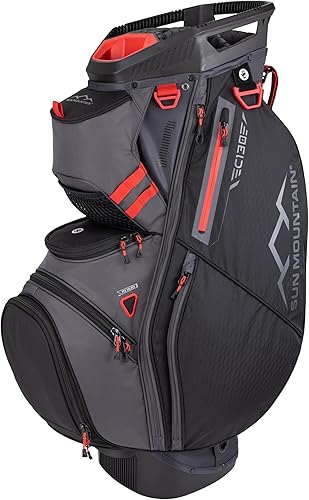
Sun Mountain C130: for golfers who usually ride
The C130 suits golfers who want to reach their equipment without working around a cart strap. Its pass-through leaves pocket access clear, and Sun Mountain designed the dual Velcro Smart Straps to reduce twisting on riding carts.
Its 11 pockets include apparel storage, valuables spaces, an insulated cooler and a magnetic rangefinder pocket. That layout suits a golfer who wants regular-use items separated rather than piled into one large compartment.
The compression-molded base gives it a cart-focused foundation. Skip it if you often walk with the bag on your shoulders or want legs for practice stops away from a cart.
ASK ECHO T-Lock: for golfers who bring more gear
The ASK ECHO suits golfers who want a place for extra equipment and dislike loose club movement. ASK ECHO designed its club-holding top to reduce rattling and collisions, with full-length dividers below.
Its 12 pockets include 2 shoe pockets, 2 waterproof valuables pockets and a large cooler compartment. The storage makes sense for cart-based rounds where extra clothing and separate shoes are useful.
At 11 pounds empty, it demands more lifting before you add clubs or supplies. Skip it if you carry often, and check grip compatibility: ASK ECHO specifies oversized grips up to 1.2 inches for this design.
Findway 14-Way: for golfers who switch how they play
The Findway suits golfers who carry some rounds, use a cart for others and want a stand at the practice area. Its legs and dual straps serve those off-cart parts of the day.
It has 8 pockets, including 2 cooler pockets, plus a glove attachment area and towel loop. Separate club compartments offer organization without choosing a dedicated cart bag.
Skip it if you always ride and need more separate storage for extra gear. It also deserves comparison with lighter alternatives if carrying a full round is your main use.
How should you set up the bag before a round?
Adjust the bag while it holds your normal equipment, then check access and balance. An empty-bag fit can hide problems that appear once clubs and supplies are inside.
For carrying, start with both straps at similar lengths and fine-tune from there. Keep loose strap ends secured so they don't catch on clubs or brush the ground.
Set a stand bag on firm ground and make sure both feet settle before releasing it. On a slope, choose a flatter spot rather than relying on the legs to hold any angle.
For cart use, seat the base first and route the strap through the intended channel or attachment points. Tighten enough to hold the bag without crushing pockets or squeezing the stand mechanism.
Arrange clubs so the ones you reach for most remain easy to remove in the bag's mounted position. Return each club to the same place to make a quick club check easier before leaving a hole.
Open your drinks, valuables and rainwear pockets once the bag is secured. Reposition the bag before starting if any essential opening is blocked.
What mistakes cause the most bag problems?
The biggest mistakes are buying for rare occasions, overpacking and assuming every cart fits every bag. Choose around the round you play most often.
- Buying for an occasional riding round: Regular carriers give up useful carrying features for storage they seldom need.
- Choosing by empty weight alone: Strap shape, balance and the full load affect carrying comfort.
- Treating pocket count as capacity: Several small pockets may not hold the bulky layer you bring.
- Tightening over the wrong area: A strap across a zipper or leg hinge can block access or movement.
- Ignoring grip fit: An organizer top needs to suit your clubs, especially larger grips.
- Packing every spare ball: Unused gear adds weight on your shoulders and during loading.
A small packing change can solve a problem that looks like a bag problem. Remove unused items and adjust the setup before deciding you need more storage or a different style.
How do you care for stand bags and cart bags?
Empty, clean and dry the bag after wet or muddy rounds, paying attention to moving parts and enclosed pockets. Simple care keeps dirt from building up around zippers, straps and stand hinges.
Brush off loose dirt, then wipe dirty areas with a damp cloth and mild soap where suitable. Follow the bag's care instructions before using stronger cleaners.
Leave wet pockets open and allow the bag and rain hood to dry before storage. A rain hood protects the club opening, but it doesn't make every pocket waterproof.
Keep stand feet and hinges free of packed mud, and check that both legs move freely. If a leg binds, inspect the mechanism rather than forcing it or bending it back by hand.
Check cart straps and attachment points for wear when you load the bag. Avoid dragging either bag by its base or leaving heavy gear pressing against folded stand legs during storage.
Stand bag vs cart bag: how do you make the final decision?
Use carrying frequency as your first decision rule, then let cart fit and storage settle the rest. In the stand bag vs cart bag choice, your normal routine matters more than an occasional exception.
Pick a stand bag if you regularly shoulder the clubs or want easy support at practice stops. The Findway fits mixed use, while a lighter stand bag may better suit golfers who carry nearly every round.
Pick the C130 if you mostly ride and want convenient access to separate gear pockets. Choose the ASK ECHO if its extra storage and club-holding design justify the heavier load.
If you always use a push cart, confirm support fit before choosing either style. Secure mounting, reachable pockets and clear club access should decide the purchase.
Compare our best golf stand bags and best golf cart bags for alternatives. Our golf bags for push carts guide narrows the options for golfers who walk without carrying.
For a final checklist covering straps, storage and club organization, use the complete guide to choosing a golf bag.
Frequently asked questions
Can you use a stand bag on a golf cart?
Yes, provided the stand bag sits securely and its folded legs clear the cart supports; keep straps away from the leg mechanism and check that pockets open while the bag is secured. The Findway includes cart attachment openings; our guide to putting a stand bag on a push cart explains the fit checks.
Is a cart bag too heavy to carry?
A cart bag is practical for short transfers, but regular shoulder carrying calls for suitable straps and manageable loaded weight; count clubs, water, balls and clothing, not just the empty bag. For full walking rounds, a stand bag usually offers a more useful combination of carrying straps and support between shots.
Do stand bags have enough storage?
Yes, a stand bag can hold normal round essentials if you pack carefully and choose suitable pocket shapes; check that your rain layer, drinks and valuables each have a usable place. Golfers who bring extra clothing or separate shoes may prefer a cart bag with more dedicated storage.
Which bag is better for a push cart?
The better bag is the one that fits the push cart securely and keeps clubs and pockets within reach; check the lower cradle, upper support and strap path together. Both bag types can work; our golf bags for push carts guide explains how to choose a suitable pairing.